
Radiator installation in Cardiff
Cold rooms, uneven heating or an old system that's past its best. Marvel Plumbing Services fits new radiators to bring warmth back where you need it, with proper pipework, valves and a system that works as it should.
When you need new radiators
A heating system works harder than you might think. After ten or fifteen years, radiators can start to show their age. These are the most common reasons to upgrade:
- One room stays cold while others are warm, even with the valve turned up
- A radiator is cold at the bottom but hot at the top, usually because sludge has built up inside
- Water leaks from a radiator joint or the valve itself
- The radiator is dented, rusted or the paint is peeling badly
- Your boiler is new but the old radiators don't respond properly or heat unevenly
- You're refitting a room and want radiators that fit the new layout or look
- The system is noisy—banging or gurgling—which often means old radiators and poor circulation
What we fit
Radiator choice depends on your room, your budget and how the pipes run. We'll talk through which makes sense for your house.
Panel radiators
The most common choice. Neat, good heat output and they fit neatly against a wall. Available in a range of heights and widths to suit different spaces.
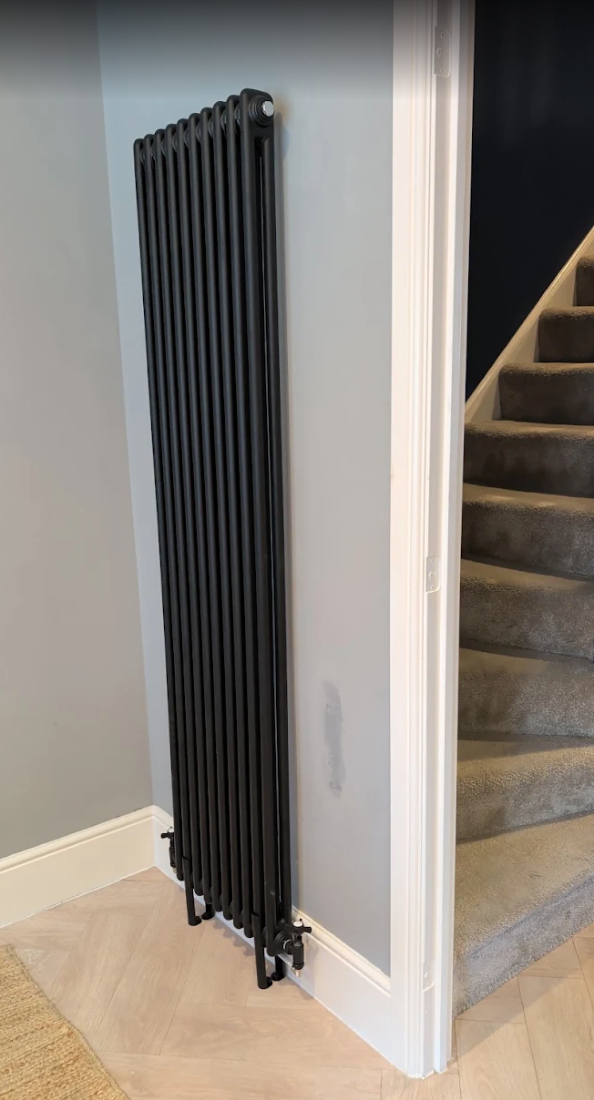
Column radiators
Traditional look, often chosen for period homes or where you want a more decorative finish. They're bulkier but give a distinctive appearance.
Compact and low-profile models
Useful in tight spaces, under windows or where wall space is limited. They still give decent heat if sized right.
Towel rails
Practical for bathrooms. They double as a radiator and a place to warm a towel, so the room gets heated and you get a dry towel at the same time.
Materials and what lasts
Nearly all radiators are made from steel or aluminium. Here's the difference:
- Steel panel radiators — The standard choice. Hardwearing, good heat output, hold water well and suit most heating systems. They need a dose of inhibitor in the water to slow corrosion if they're not already protected.
- Aluminium radiators — Lighter, respond faster to heat changes and look sleek. Good for modern systems. They're slightly more expensive but tend to need less maintenance.
- Cast iron (column) — Heaviest but classic. They take longer to heat but hold the warmth longer, which suits some homes. Need careful handling during fitting.
Whatever you choose, we'll fit it with the right valves, brackets and connections so it sits square, doesn't leak and works with your boiler.
Sizing and positioning
A radiator has to be the right size for the room it's heating. Too small and the room stays cold; too big and you waste fuel. We work it out using the room's volume, insulation and how much heat loss there is through windows and walls.
Positioning matters too. A radiator under a window makes sense because cold air comes down the glass, but it has to be accessible for bleeding and valves. If a room has no suitable wall, we can often run a pipe to fit one somewhere practical.
The pipework can go under the floor, in the wall (if safe) or along the skirting, depending on what's already there and what suits the room. We'll explain the options in your quote.
How we fit a radiator properly
- We isolate the system and drain itThe water is turned off at the boiler and the system emptied so we can remove the old radiator and fit the new one without flooding.
- Brackets are fitted securelyHeavy radiators need strong brackets. We check the wall can take the weight and fit them level so the radiator sits true.
- Pipes are connected and tightenedNew pipe runs or existing ones are fitted to the radiator's inlets and outlets with compression joints or soldered fittings, whichever suits.
- The system is refilled and bledWater goes back in slowly, air is bled from the radiator and all joints are checked for leaks under pressure.
- Valves are set and the radiator is testedThermostatic and isolation valves are fitted and adjusted, and we run the system to make sure heat flows evenly and there are no cold spots.
- You get a walk-through and paperworkWe show you how to bleed it if needed, explain the valves and leave you with what was done.
Building Regulations and safety standards
Radiator work doesn't usually need Building Regulations sign-off if you're just replacing existing radiators in the same location. But if you're adding new radiators to extend a system, moving them to a different wall, or doing this as part of a larger bathroom or kitchen refurbishment, the work may need to be certified to show it meets the Water Supply (Water Fittings) Regulations and Building Regulations Part L (energy efficiency).
We know what applies to your job and what paperwork you might need. If the work does fall under Building Regulations, we'll make sure everything is fitted to the standard required, and we can arrange certification if needed.
Our plumbers hold City & Guilds Level 2 and Level 3 Plumbing and an NVQ Level 2, so the work is done to the right standard throughout.
What affects the cost
Radiator prices vary, so here are the main things that change the final bill:
- The radiator itself — size, type and brand all affect the price
- Pipework — whether pipes exist or need to be run new, and whether they're easy to access or need chasing into walls
- The old radiator — if there's one to remove and dispose of, that adds time
- Valves and fittings — thermostatic valves and isolation valves are extra but recommended
- Making good after — plaster, paint or floorboards if pipes were hidden
- Distance and access — a radiator on the first floor of a Victorian terrace is different to one in a modern bungalow
We quote after a visit so you know the full price before we start, with no surprises.
Keep it running smoothly
New radiators are built to last, but they need a little care:
- Bleed air from the radiator if it starts to get cold spots — usually once a year at the start of winter
- Check the expansion vessel pressure on your boiler (if it has one) — the engineer who serviced your boiler last should have done this
- Use inhibitor in the water to slow corrosion and sludge buildup — a fresh dose every few years keeps the system clean
- Don't hang heavy things on a radiator; they're designed to hold their own weight
- If a valve leaks or a radiator starts to get cold patches again, ring us rather than leaving it
Questions about radiator installation
How long does it take to fit a new radiator?
A single radiator usually takes two to four hours, depending on whether pipes exist or need to be run new, and how much pipework is involved. If we're fitting several at once, we work through them in a day. We'll give you a time estimate in your quote so you know what to expect.
Can I use a radiator that's smaller than the old one in its place?
Only if the room isn't too cold already. A radiator has to be sized for the room it heats, and if it's undersized, the room will stay chilly even on full heat. We calculate the size you need based on the room's volume and insulation, so you get one that actually works.
Do I need to turn my boiler off while the radiator is fitted?
Yes. The heating system has to be switched off and drained before we remove an old radiator or add a new one. The boiler is turned off, the water is emptied out, and once the new radiator is fitted and the system is refilled and bled, it's turned back on. It usually takes a few hours from start to finish.
What's a thermostatic radiator valve and do I need one?
A thermostatic valve lets you set the temperature for each radiator individually, so you can have the living room warmer than a bedroom without heating the whole house up. They save money and give you more control. We recommend fitting them, especially if you're replacing radiators in just one or two rooms.
Will I need to bleed the radiator after it's fitted?
We bleed it before we leave so there's no trapped air in the pipes. You shouldn't need to do anything immediately. If a cold spot appears months later, you can bleed it yourself using the bleed screw at the top — it's a five-minute job and we'll show you how if you like.
What happens to the old radiator?
We'll remove it and take it away with our tools and waste. If there's any salvageable material like the valve or brackets, we'll separate that for you. The main radiator is disposed of responsibly.
Ready to get new radiators fitted?
Tell us which rooms need work and we'll size and quote them for you. It's free, and you'll know the price before anything starts.